
Plantation Previous-Resident Sources
A Plantation address leaves different records in different eras. The current parcel card is the best starting point because its folio, legal description, owner, and sales links connect a modern street address to Broward County records. Deeds then establish transfers of title. Directories and census schedules can add occupants, while permits date work rather than residence. No official catalog reviewed for the research published an exact Plantation reverse-directory run, so library holdings must be confirmed before assuming a year exists.
| Source | Local years covered | Keeper or access point | Evidence supplied |
|---|---|---|---|
| Official Records images | County holdings from 1871; web images mainly 1978 onward | Broward Records, Taxes and Treasury | Deeds, liens, probate instruments, and legal descriptions |
| Full party-name index | July 7, 1977 onward | Broward Acclaim | Grantor and grantee links in the title chain |
| Limited online index | March 9, 1972 to July 7, 1977 | Broward Acclaim | Instrument, book/page, and recording-date paths |
| Plantation permits | Online start not stated | Accela and Building microfilm | Work, applicants, contractors, inspections, and dates |
| Regional or reverse directories | Exact Plantation run unverified | State, Broward, and local libraries | Occupants by year and address when held |
| Federal census | Public schedules through 1950 | NARA and library databases | Households, tenure, kinship, and occupations |
For a recent transfer, begin online. For an older home, retain every book/page and instrument number before moving to the county counter or written request. Plantation was incorporated after much of its land history had begun, so the durable property description often matters more than the current city label.
Start Plantation Previous-Resident Records
The Broward County Property Appraiser search accepts an owner name, situs address, or property ID. Situs means the physical parcel being assessed. The mailing address is where the owner receives notices, and it may point to a trust, company, post-office box, or another home. Neither field alone names every person who occupied the building.
Copy the folio exactly, along with the subdivision, lot and block, municipality, building year, exemption, and sales instrument. A homestead exemption can support owner occupancy at an assessment date, but it is not a household roster. The parcel sales link is especially useful because it can supply the instrument or book/page needed for the first deed search. Past residents become easier to trace when the legal identity of the land is settled first.
Note: A mailing address and a Plantation situs may match, but that match still does not identify every household member.
Trace Plantation Previous Owners
The Broward Official Records Search is the core source for a Plantation chain of title. A chain of title is the sequence of recorded transfers for the same land. Work backward from a verified current parcel, and compare the legal description on every deed. A street address can be absent or inconsistent in an older instrument.
- Open the current BCPA parcel card. Record the owner, folio, legal description, and most recent sale instrument.
- Find that purchase deed in Acclaim. Record the grantor, the grantee, date, instrument number, and book/page.
- Search the seller as a grantee before the sale date. Confirm that the earlier deed contains the same legal description.
- Repeat the seller-as-grantee step. Use spelling variants, initials, trust names, and both direct and indirect party roles.
- When the web index no longer supports a name search, carry known instrument, book/page, plat, and date details to Search and Copy.
- Grantor
- The person or entity transferring an interest, usually the seller in a deed.
- Grantee
- The person or entity receiving the interest, usually the buyer.
- Legal description
- The lot, block, subdivision, condominium, plat, or metes-and-bounds wording that identifies land.
- Chain of title
- The linked series of transfers for the same parcel.
Plantation Previous-Resident Deed Cutoff
Broward’s digital boundary is unusually exact. Full party-name searching begins July 7, 1977 at 1:47 p.m. The period from March 9, 1972 through that cutoff supports limited searches by instrument number, book type, official-records book/page, and date. Earlier records do not appear in the web system as a normal party-name search.
The county still holds older media. Its Official Records images reach back to 1871, with principal online image access described as 1978 to the present. The Broward Search and Copy service is the fallback for prior media and certified copies. Written and counter access matter because an absent web result is not evidence that no deed exists.
The county’s historical-copy route is shown below. The image helps distinguish the older-media service from the ordinary recent index.
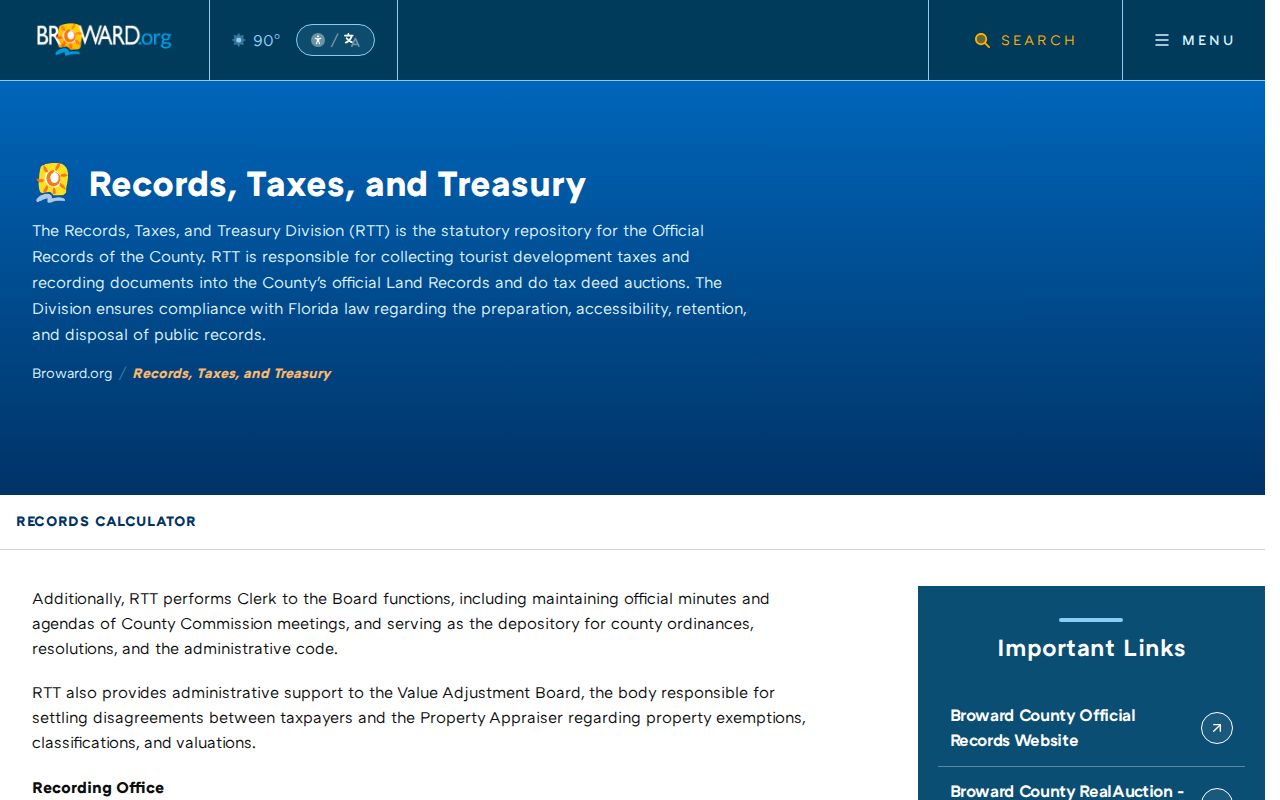
Use the service with every citation already found. Exact book/page, instrument, date, party, and legal details reduce ambiguity in a request.
Plantation Address History Through Plats
Plantation’s postwar growth makes plats and building records valuable. Frederick Peters acquired about 10,000 acres in 1931, early building centered on East Acre Drive, and incorporation followed in 1953. Later growth and annexation pushed west. A county deed or plat may therefore predate the familiar street address or the parcel’s entry into Plantation city limits.
Search plats regardless of date in Official Records, then use the legal description to hold the chain together. The Plantation Accela portal can add permit and enforcement events by address. If its coverage does not reach the needed era, Building microfilm staff can be reached at 954-797-2783. Permits can date construction, additions, reroofing, or major work. Applicants and contractors are event-specific and should not be labeled residents.
Annexation can change which city keeps a permit or code record without changing Broward’s title chain. That geography is a useful explanation for apparent gaps, not proof that a family moved.
Find Plantation Past Households
Ownership is only one layer of previous-resident research. A reverse or criss-cross directory is arranged by street and house number, then lists an occupant and often a phone number. Exact Plantation runs were not verified in the inspected official catalogs. Ask the State Library Florida Collection, Broward County Library, Helen B. Hoffman Plantation Library, and Plantation Historical Museum for Fort Lauderdale or Broward regional volumes as well as Plantation titles.
The full collection method belongs to the Plantation city directory page, but one-address work uses a simple sequence:
- Confirm the address form and subdivision used in each directory year.
- Browse the reverse section and copy the entry exactly, including vacant or new-construction notes.
- Switch to the alphabetical section to follow name variants and moves.
- For 1950 or earlier, compare the directory entry with the census household and enumeration district.
- Bridge later gaps with deeds, permits, telephone books, newspapers, and obituaries.
A directory’s publication date can trail the canvass. Absence is not proof of nonresidence, especially when rural routes, postal labels, and metro titles changed.
Plantation Heir Records Close Trails
A deceased owner may lead from a probate docket to a recorded probate document and then to an heir deed. Search the Broward Clerk of Courts for the case, then compare names and dates with Official Records. An estate representative may sign an instrument without being an heir or occupant, so each role must stay distinct.
The Broward Clerk’s Archives Division handles older court-file access. Its public page is pictured below as one of the required non-web-index routes for Plantation previous residents.
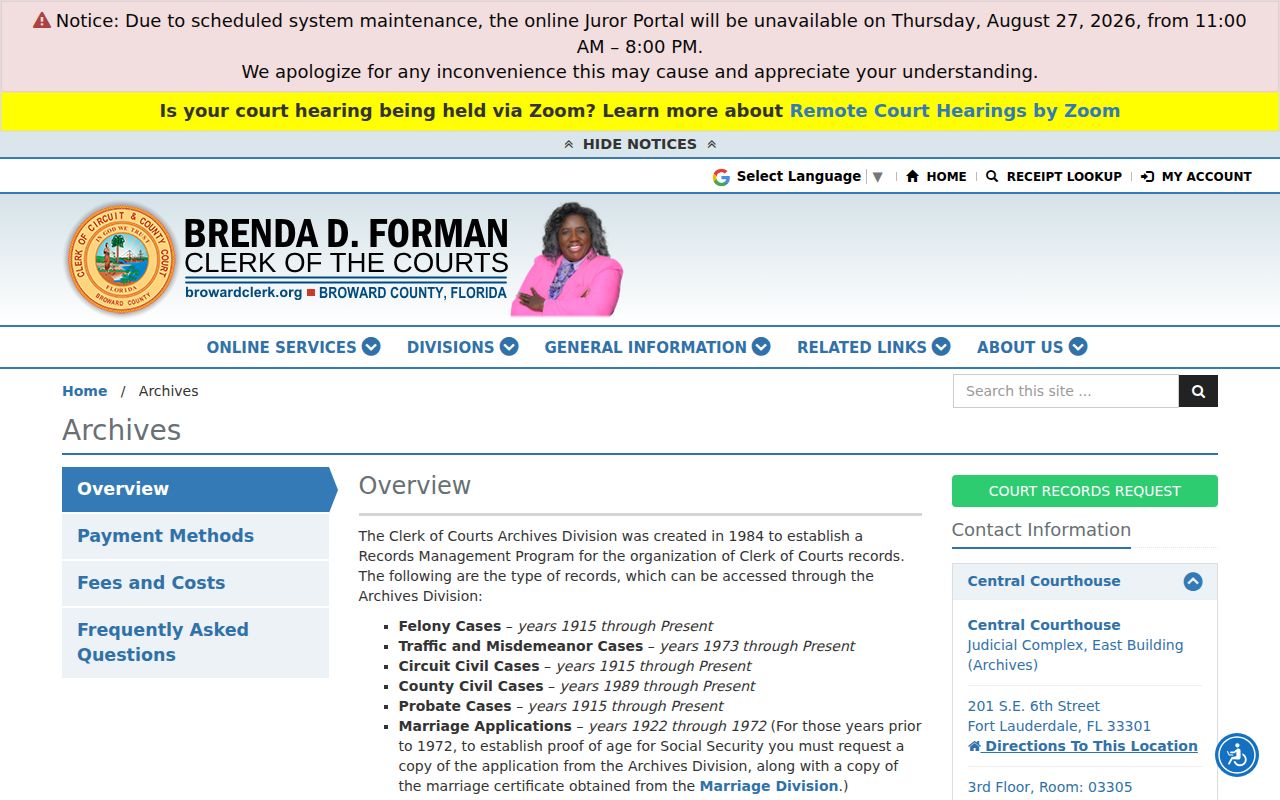
For files not available in the portal, use the Clerk’s request channels. Court records can explain a transfer, while the recorded deed remains the land instrument to cite.
Verify Plantation Previous-Resident Transitions
Obituaries and historical newspapers can name relatives, prior communities, and funeral details. Treat them as leads. Florida death certifications can confirm death facts, subject to access rules for cause-of-death information. The official Florida death certificate page outlines available order routes and eligibility.
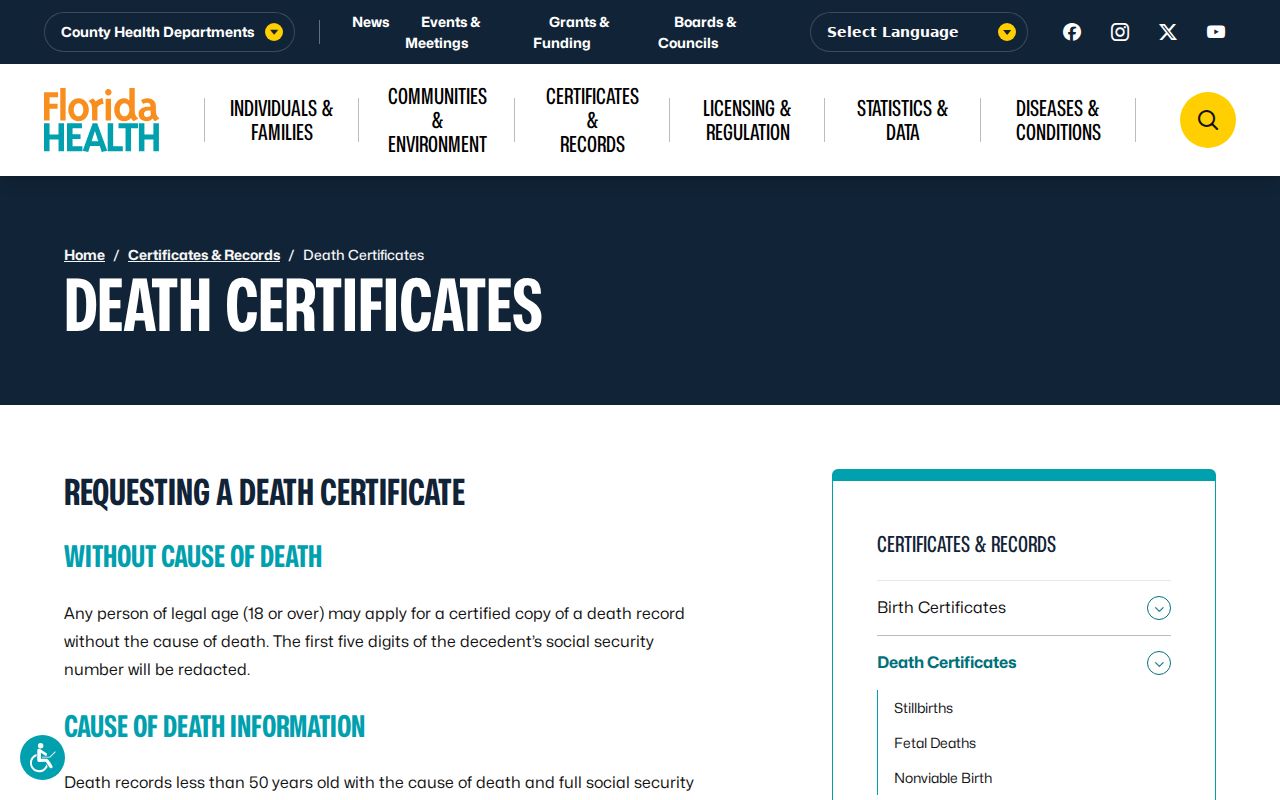
Death evidence can explain the timing of probate, but it does not prove that the person lived at the Plantation address on the date of death. Pair it with a directory, census, homestead clue, deed, or obituary that names the place.
Marriage and divorce certifications can also explain surname changes that break a name trail. Florida’s divorce certification service is shown below.
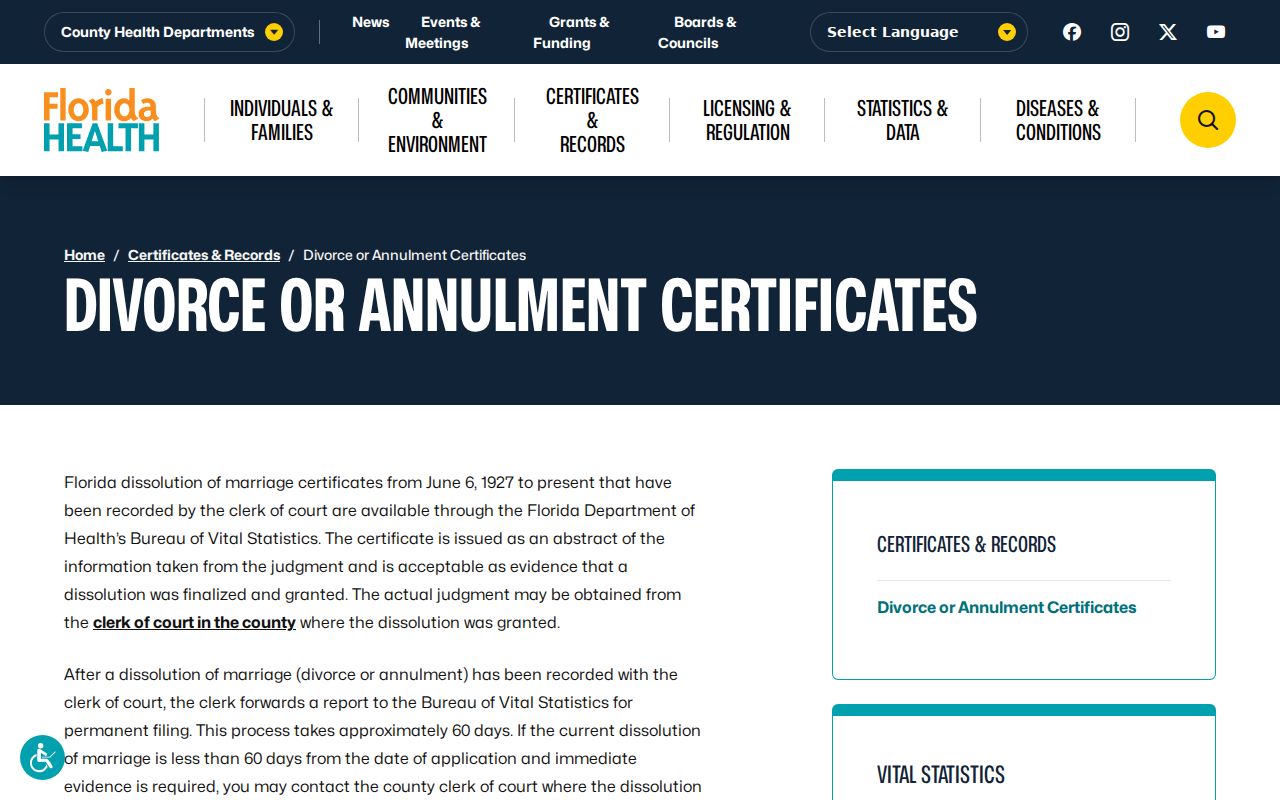
Use a certification to support an identity link, then return to the parcel’s legal description before extending the ownership chain.
Request Missing Plantation Records
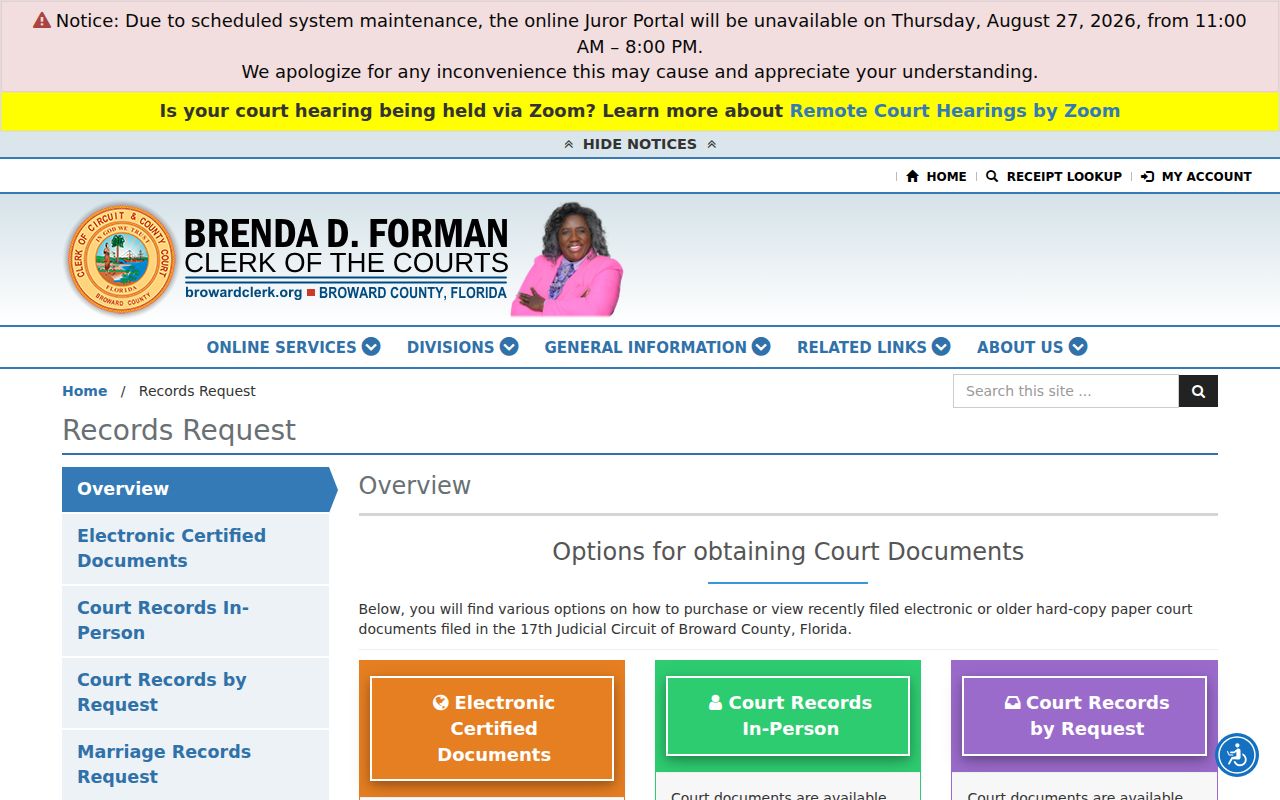
Older court documents may need a web, counter, or written request. The Broward Clerk Records Request route is pictured below. Supply a case number when known, and state the document sought rather than asking for an office to solve an open-ended family history question.
The recording office is separate from the court-case division. The Broward Recording Office holds deeds and other Official Records.
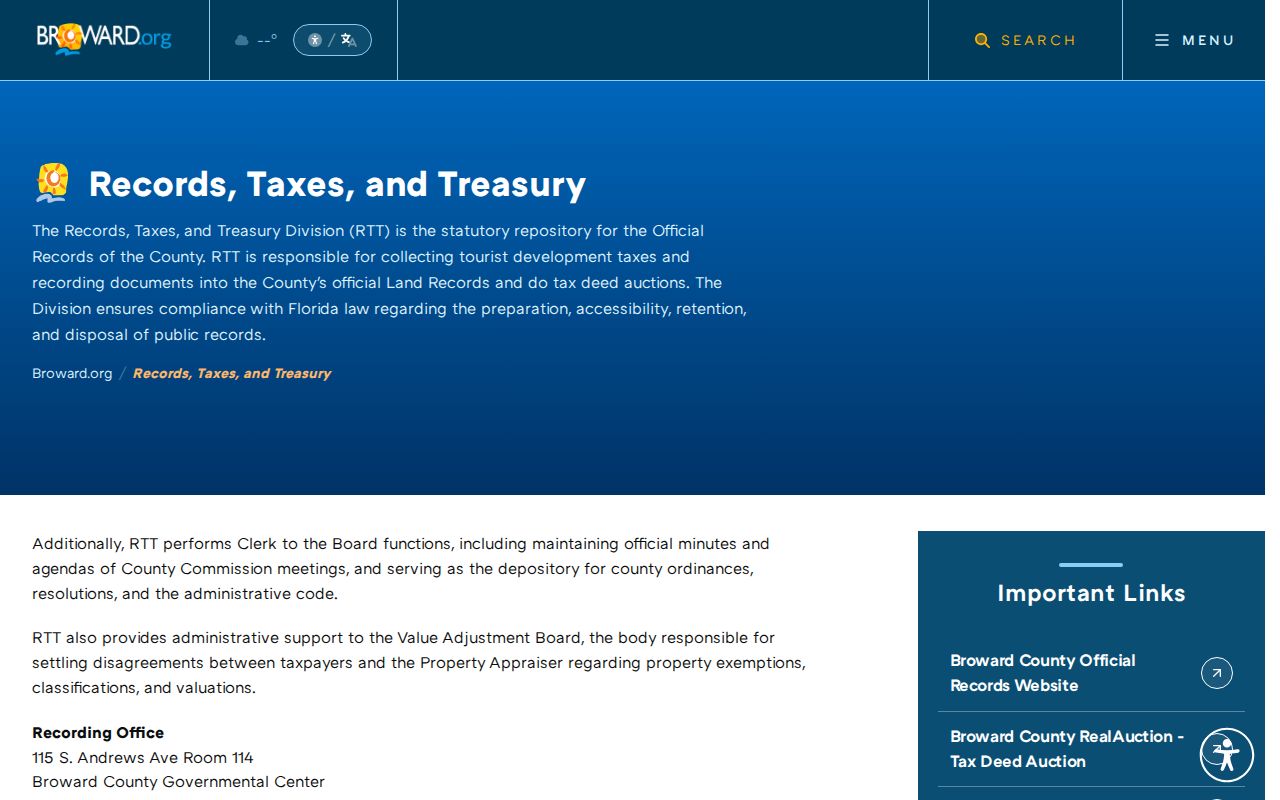
Fort Lauderdale is the county seat, so Plantation research can require county counters there even when the property and city permits are local.
Use Plantation Resident History Lawfully
Previous residents may include living people whose current location is unrelated to the old parcel. Keep the work focused on the house, a family line, an estate, or another lawful personal purpose. Do not publish protected addresses, private rosters, or guesses that turn an owner into an occupant. Florida law also protects certain address records, while sealed files and confidential vital details remain unavailable.
Lawful use. Plantation house history must never be used to track, intimidate, stalk, harass, or harm a living person.
Strong conclusions cite the source, date, and exact role. “Grantee on a deed,” “owner on an assessment,” and “occupant in a directory” are different claims. That care keeps Plantation previous residents tied to evidence rather than assumption.