
Looking Up Your Plantation Neighbors
A Plantation block is best examined as a set of nearby parcels, not as one search result. The map defines adjacency. The assessment roll identifies owners and mailing destinations. Voter data can identify some registered adults, while permits show work or enforcement events. Each source has a limit, and none proves a full household.
| Source | What It Shows About a Block | Access |
|---|---|---|
| Plantation PGIS and Broward GIS | Parcel layout, adjacency, zoning, land use, and aerial view | Free; informational, not survey-grade |
| BCPA property roll | Owner, mailing address, situs, exemptions, and building facts | Free; owner is not always occupant |
| Broward voter file | Nonexempt registered voters by residence | Request; misses nonvoters and protected voters |
| Plantation Accela | Permit and code events tied to an address | Guest search; an event is not a roster |
| Official Records and associations | Title changes or voluntary public contacts | No right to a private member list |
Start with a precise address and confirm that it lies inside Plantation. Postal labels can cross city limits. Keep a citation for each parcel so facts from one property do not drift onto the next. Owners, occupants, applicants, and registered voters are separate roles.
Mapping a Plantation Block: Parcels and Owners
The Plantation GIS service provides address, street, parcel, boundary, zoning, land-use, water, code-zone, and aerial layers. No verified public buffer export was found, so manual adjacent-parcel work is the sound method.
- Search the known address and zoom until parcel lines and labels are clear.
- Click the target parcel, record its folio, and open the official property card.
- Click parcels beside, behind, and across from it. Turn off any layer that captures clicks.
- Record owner, mailing address, and situs separately; flag common areas and public land.
Use the Plantation street directory when the question expands to a full named street. The block method stays narrow and gives closer attention to properties that touch or face the starting address.
Plantation Owners Are Not Occupants
The Broward County Property Appraiser card may show an owner name, mailing address, physical situs, legal description, exemptions, sales, and building data. Situs is the land being assessed. A matching mailing and situs address can support owner occupancy, and a homestead exemption is useful at its assessment date. Neither identifies every person who lives there.
A renter may be absent. A trust, corporation, estate, or association may be the recorded owner. Children do not belong in ordinary block research, while partners or relatives can remain invisible in title records. Protected records may suppress a name or address. Notes such as “assessment owner,” “registered voter,” or “permit applicant” are far more accurate than calling each listed person a neighbor.
Note: Owner mail can lead to another home, an office, a trust, or a post-office box rather than the Plantation situs.
Plantation Neighbors in Voter Data
The individual Florida voter lookup lets a voter confirm status and election details. Identifying fields prevent street browsing. Block-level work instead uses the Broward Supervisor of Elections data request. Electronic registered-voter records are public subject to exemptions, and the researched fee is a $20 voter-list database search.
A requested file can include name, residence and mailing addresses, registration status and date, precinct, districts, party affiliation, and participation history. Participation records whether a voter was credited in an election, never a ballot choice. Social Security, driver-license, and Florida ID numbers are not released. Confidential voters are removed.
Normalize house number, direction, and street suffix before matching rows to parcels. Even a good file misses nonregistered adults, recent movers, protected voters, and all children. It cannot serve as a census of Plantation neighbors.
Plantation Block Events by Address
The Plantation Accela portal searches building, planning, business-tax, and enforcement records. Results may give a project description, applicant, contractor, dates, inspections, and status. These facts can explain construction, a reroof, an addition, or a code event without pretending to identify a household.
Guest users can run basic searches, while registered users handle applications and some added detail. If an older building record is absent online, Building microfilm staff can be reached at 954-797-2783. Records outside the portal can be requested through the City Clerk. An applicant might be an owner, manager, agent, or contractor. Keep that role attached to the name.
Plantation Neighborhood Names and Contacts
Local names add context when a street alone is hard to place. Plantation Gateway, Midtown, Technology Park, East Acre, Plantation Acres, Lago Mar Colony, Melaleuca Isles, Mirror Lake, Park East, and Marcano Estates appear in city history or facility geography. They can guide searches in notices, maps, historical files, and corporate records.
| Community lead | Official follow-up | Useful request |
|---|---|---|
| Named district | Plantation City Clerk | Public contact list, notices, or meetings |
| Incorporated association | Florida Sunbiz | Status, registered agent, filed documents |
| Historic place name | Historical Museum or local library | Maps, clippings, photos, neighborhood files |
| Subdivision | BCPA and Broward GIS | Legal description and mapped parcels |
No comprehensive official HOA or civic-member directory was located. Verify an incorporated group through Florida Sunbiz, then look for public city notices or a voluntarily published board contact. Membership, gate, congregation, and block-watch rosters remain private unless their holders publish or archive them.
Compare Plantation Neighbor Sources
Commercial neighbor tools may merge old assessments, phone material, marketing files, and inferred ties. Their speed can hide mismatched people and dates. Official records take more work but retain a custodian, record date, role, and parcel link. That makes errors easier to spot.
| Method | Strength | Main caution |
|---|---|---|
| Official parcel and voter sources | Dated fields from a named custodian | Each roll serves a limited purpose |
| City permits and notices | Address events and public contacts | Applicants are not always residents |
| Commercial compiled category | Fast aggregation | Data may be stale, inferred, or mismatched |
Use the narrowest source that answers the question. A parcel map defines adjacency, a deed establishes title, and a voter request covers nonexempt registrants. Combining them should add context, not erase their limits.
Plantation Neighbors and Vital Privacy
Birth and marriage certificates are not block rosters. Florida births less than 125 years old are confidential, with eligibility rules for access. The Florida birth certificate page is shown below because it makes that boundary clear.
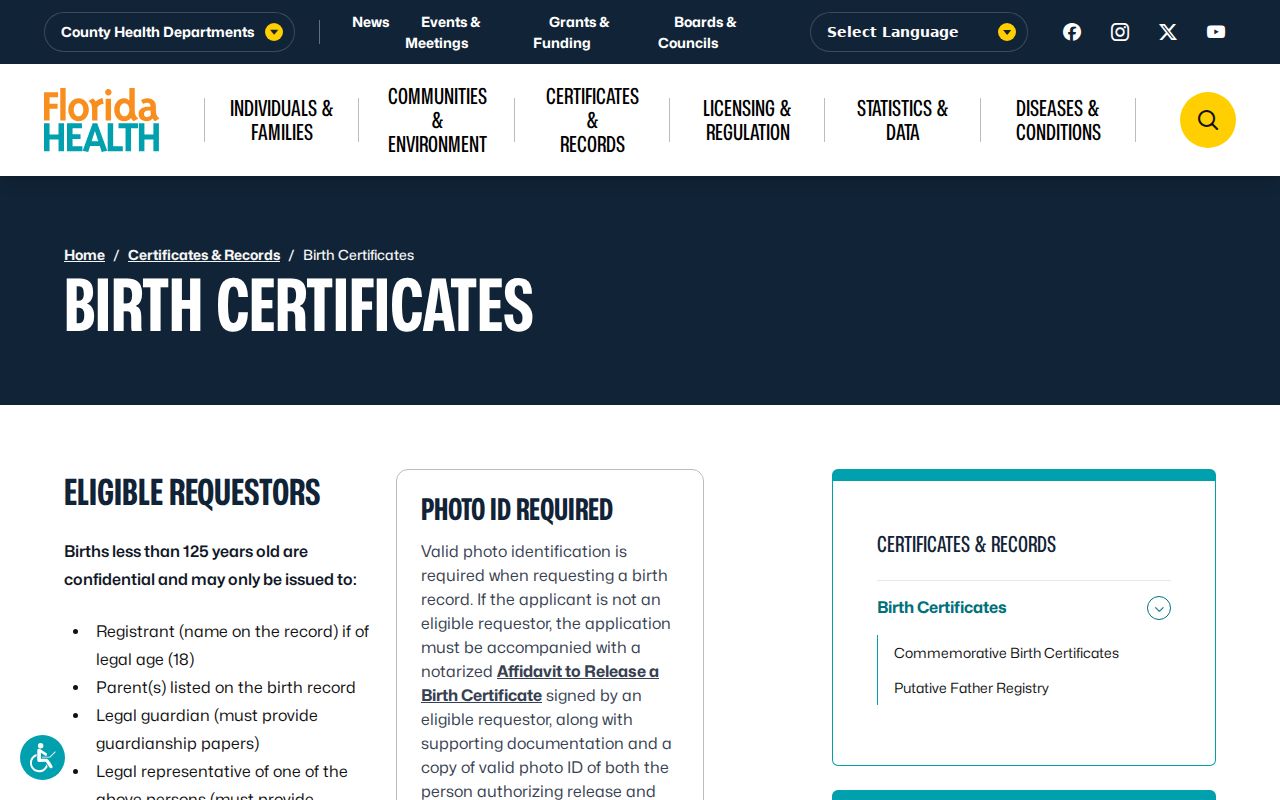
The eligibility gate is a privacy rule, not an obstacle to evade. Do not use vital-record forms to assemble a household list.
Marriage certifications are generally public, but they record an event rather than a current address. The Florida marriage certificate service appears below.
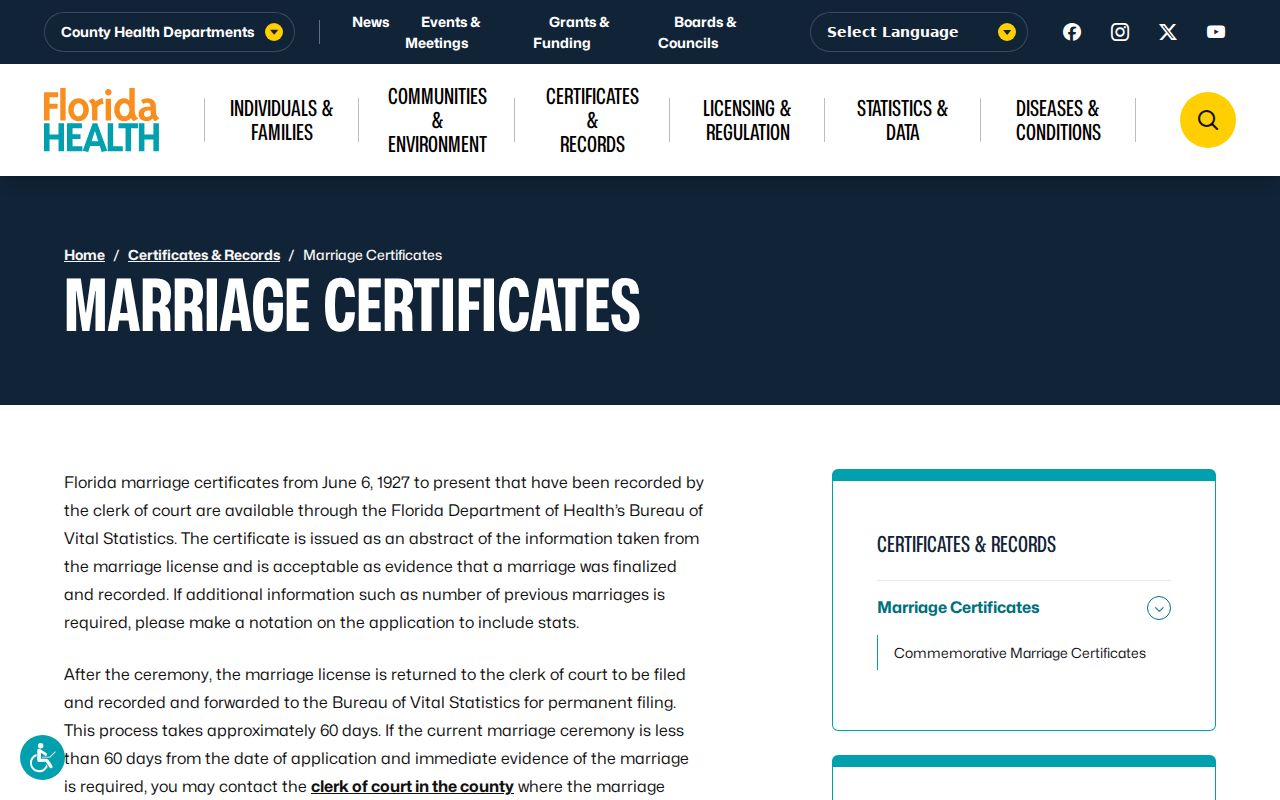
Use it only when a lawful family-history need calls for it, and never infer present residence from the event alone.
Plantation Neighbor Lookup Privacy
Florida's public-records policy is not a household directory. Chapter 119 contains exemptions, and eligible protected people may seek address redaction. The Address Confidentiality Program gives qualifying victims a substitute mailing address. Driver data is restricted, ballot choices are secret, utility subscriber data is not a public directory substitute, and private association lists stay private.
The current Florida Public Records Law is pictured below. Read it with the exemptions that govern each record family.
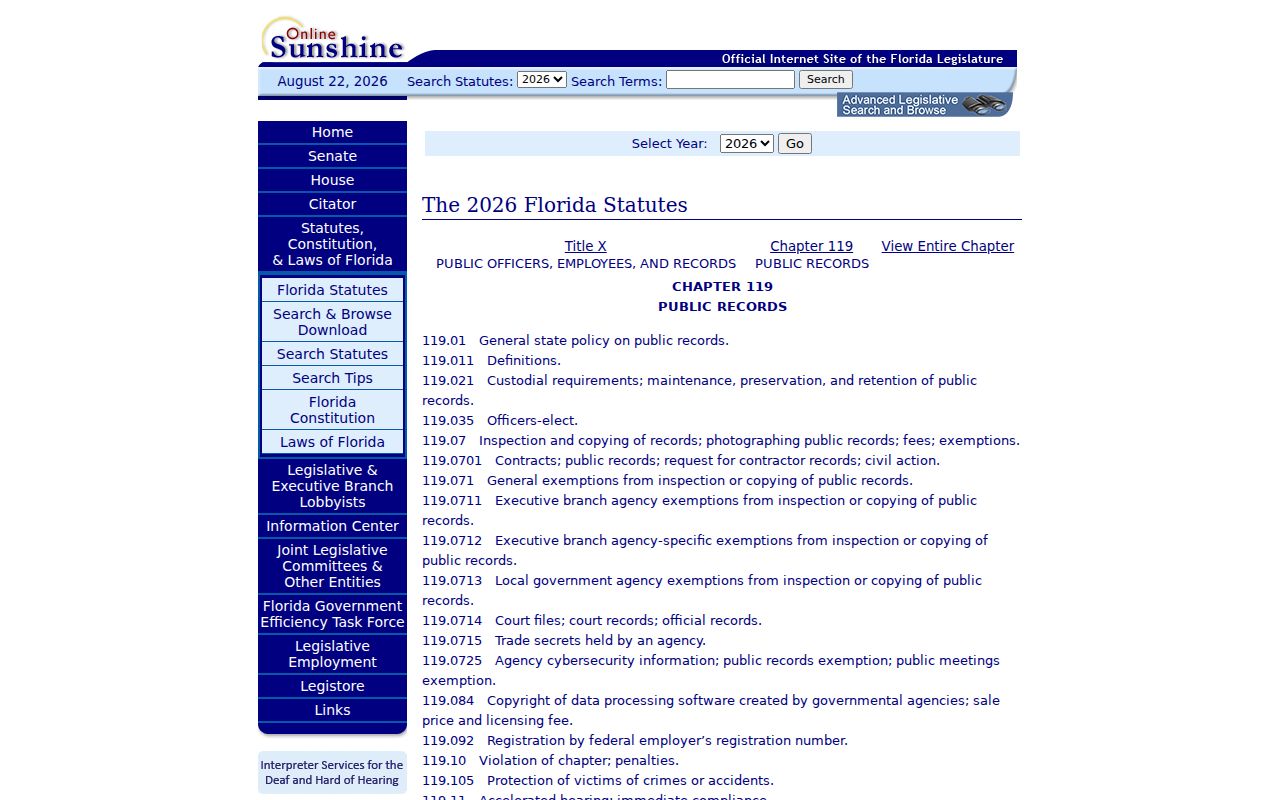
The law permits access, but it does not justify publishing a sensitive address or pursuing a person who has chosen not to engage.
Lawful use. Look up Plantation neighbors only for civic awareness, reconnection, or personal safety, never to watch, intimidate, stalk, harass, or harm anyone.